


Page 80 - Textos de Matemática Vol. 44
P. 80
70
M. E. HOCHSTENBACH, D. A. SINGER AND P. F. ZACHLIN
1
0.5
0
−0.5
−1
−0.5 0 0.5 1 1.5 Real
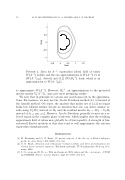
Figure 2. Data for A−1: eigenvalues (dots), field of values
W(A−1) (solid), and the two approximations to W(A−1): (5.1)
(W(A−1|AU), dotted) and (5.2) (W(H−1), dash, which is an
k
k
inverse matrix Uk∗A−1Uk, may give more promising results.
We note that in principle we can use any search space Uk in the approxima- tions. For instance, we may use the Jacobi–Davidson method [12, 5] instead of the Arnoldi method. Of course, the analysis that makes use of (2.2) no longer holds but without further details we mention that one can derive similar re- sults using Uk∗AUk instead of Hk and the residual matrix Rk = AUk − UkHk instead of hk+1,kuk+1e∗k. However, Jacobi–Davidson generally focuses on a se- lected region in the complex plane of interest, which implies that the resulting approximate field of values may globally be of lower quality. A strength of (un- restarted) Krylov methods is that they tend to well approximate the exterior eigenvalues simultaneously.
References
[1] M. Eiermann and O. G. Ernst, Geometric aspects of the theory of Krylov subspace methods, Acta Numer. 10 (2001), 251–312.
[2] O. G. Ernst, Minimal and orthogonal residual methods and their generalizations for solving linear operator equations. Habilitationsschrift, TU Bergakademie Freiberg, Ger- many, 2000.
[3] S. Goossens and D. Roose, Ritz and harmonic Ritz values and the convergence of FOM and GMRES, Numer. Linear Algebra Appl. 6 (1999), 281–293.
approximation to W(A−1|U)).
to approximate W(A−1). However, H−1, an approximation to the projected
Imag


